Quality Guidelines and the Visual Assessment of Frame Materials According to Quality Standards
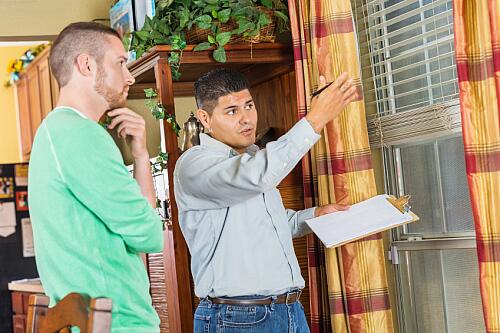
Some time ago, the Austrian Federal Economic Chamber (Wirtschaftskammer Österreich) published the quality guidelines of the Windows and Window Façades platform. The objective of the guideline is grounded in a uniform, neutral visual assessment with regard to performance. Frame materials play an important role in the quality and performance of windows and external doors, which is why they are given the greatest attention in the quality guidelines.
As a quality provider, FENSTERNORM works strictly in accordance with the new quality guidelines and presents products that meet all standards and can therefore be rated for optimal performance.
Strict Criteria for the Quality Features of Window and Door Frames
Before we go into more detail and explain some of the quality features to you, we would like to provide a rough overview of the inspection criteria for frames. This is based on the fact that uPVC profiles, aluminium profiles and timber frames have different assessment criteria. In each case, the standards are set very high and – taking the example of our FENSTERNORM quality windows – reflect the highest performance under heavy use and against the effects of the weather. Reproducing the guidelines in their full detail would go beyond the scope of this piece and produce an article that would demand a great deal of attention and time. We therefore want to limit ourselves to the most important criteria and to the essentials, and give you an insight into which criteria are of the utmost importance in the visual assessment of frame materials.
Visual Assessment of uPVC Profiles
The neutral inspection relates to the condition of the surface, to the degree of gloss and soiling, to the colour and appearance of decorative surfaces, as well as to the precision of the mitre and the alignment of the profiles relative to one another. A further criterion is any touch-up work carried out by the specialist.
In order to meet the high demands of the quality guidelines, uPVC window frames must be smooth, free of burrs at the edges, and have clean mitres and correct alignment of the profiles relative to one another. Many uPVC windows are finished with a decorative foil, which occupies an important position in the visual quality inspection. Only if it is worked completely free of creases and bubbles does it meet the standard, which is underpinned by a weld seam without air inclusions. At the seams, even the smallest geometric irregularities lead to point deductions, as these are visible at first glance and breach the quality guidelines.
Quality Guidelines for the Frame Material Aluminium
The assessment of profiles made of aluminium is even stricter than for uPVC. Even the smallest chips or colour irregularities are not permitted. Bubbles or dents, on the other hand, do not necessarily have to lead to a quality downgrade, provided that no more than a maximum of 10 surface alterations are visible per square metre. Their size must not exceed 0.5 millimetres. If a fine grinding has been agreed, the surface must not show any visible notches, weld seams or dents whatsoever.
There are special considerations with regard to the lighting conditions during the visual inspection of aluminium profiles. Whether the colour is uniform, the texture and gloss are of high quality, and the overall appearance conforms to the guidelines must be checked, for the outer side, in diffuse daylight and at a distance of no more than three metres. For interior components made of aluminium, the distance is no more than two metres.
Visual Assessment of Timber Profiles
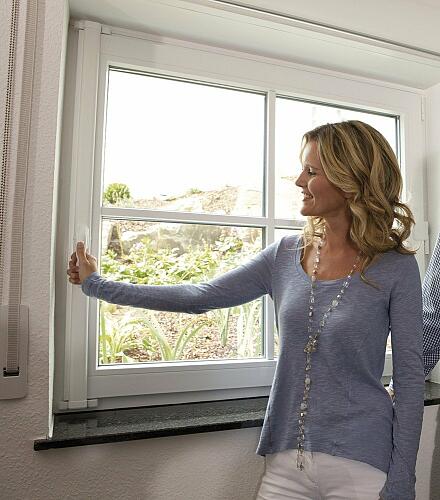
The external visible surfaces must show neither cross-cracks, planing marks nor splintering. Sanding marks running lengthwise and diagonally, on the other hand, are permitted in marginal form if they are not discernible in a visual assessment from a distance of one metre. Longitudinal cracks that are no longer visible after coating may, according to the quality guidelines, be tolerated. Any repair of cracks must be carried out before coating and goes hand in hand with the sealing of all V-joints. The visual assessment of timber frames is very strict and has practically no tolerance threshold whatsoever.
The Basis of the Visual Assessment
All window and external door frames are exposed to the weather and, for this reason alone, must be tight and free of cracks or of notches and dents. But the visual aspect, too, plays a role that should not be underestimated for you as a customer. The quality guideline is a safeguard for you, as you can rely on the visual inspection by an independent assessor and can be certain of a quality frame for your windows.
As a quality provider, FENSTERNORM commits itself without reservation to the guidelines and produces window frames whose materials withstand the visual inspection and meet the standards at the very least. The same naturally applies not only to the frames but also to the quality criteria of the glazing.
The visual assessment of frame materials establishes a benchmark of quality and rules out the possibility of poorly made window frames being offered and put on sale as branded products.