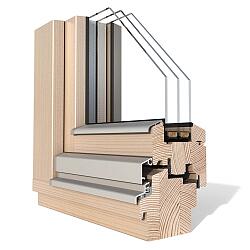
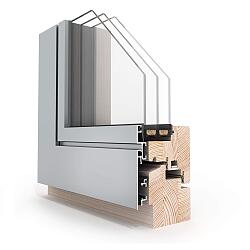
g-value
The g-value of a window indicates how well a window lets solar energy pass from the outside into the interior through the glazing. Depending on the orientation of the windows and on the g-value and U-value, heat gains can be achieved with good planning.
The higher the g-value, the more solar radiation is transmitted inwards through the glazing as radiant heat. With double-glazed windows, the U-value is 1.1 and the g-value approximately 0.6. This means that 60 per cent of the incident solar heat passes through the window to the inside. In winter, this energy can be used directly. However, in combination with low U-values in highly efficient energy-saving windows, both the amount of light entering and the heat gained from solar radiation decrease because of the strongly insulating windows; the total solar energy transmittance falls.
The g-value is only important for windows that are also significantly exposed to solar radiation in winter. For windows on a north-facing façade it can be disregarded, whereas it is important for a sunny south-facing façade.
When buying windows, it is therefore worth informing yourself thoroughly and seeking advice, because a window can supply a building with more energy than it loses.