When windows in an older building let in draughts, the window reveals remain cold and condensation collects on the glass in the morning, replacing them is usually no longer just a cosmetic improvement. It becomes a technical matter with a direct impact on energy costs, living comfort and property value. This guide to window replacement in older buildings is designed for homeowners and renovators who want more than vague advice and need to make informed decisions about measurements, materials, installation and budget.
In older buildings, window replacement is rarely a straightforward standard purchase. Openings are seldom perfectly square, wall constructions vary from room to room, and not every modern window system is automatically suitable for the façade, installation joints and ventilation conditions. Choosing solely on the basis of the lowest unit price often leads to paying twice through remedial work, moisture damage or unnecessarily high installation costs. At the same time, good windows do not have to be overpriced. What matters is that the window system, custom dimensions and installation conditions are properly matched.
Guide to Window Replacement in Older Buildings: What to Check First
Before choosing the material, colour or handle, three fundamentals need to be considered: the existing building structure, the actual dimensions and the renovation objectives. Replacing windows in an older building is not simply about swapping old units for new ones. It is about finding the right solution for the building.
The first step is to assess the existing condition. Are the current frames merely worn, or is there already damage around the installation joints, such as crumbling plaster, damp window reveals or visible gaps? Roller shutter boxes, window sills and adjoining façade details must also be taken into account. Particularly in older buildings, a window is never an isolated component but part of a complete building connection.
Next comes measuring. In older buildings, approximate opening dimensions are not sufficient. Measurements must be taken at several points across the width and height, while checking vertical alignment, level and installation depth. Anyone ordering made-to-measure windows should be especially careful at this stage. A window ordered too small can cause just as many problems on site as one that is too large. A structured measuring process is therefore far more valuable than trying to improvise solutions later.
The renovation objective is equally important. Is the main priority improving energy efficiency, reducing noise from a busy road, or enhancing security, appearance and comfort? These priorities determine which glazing, frame and features make economic sense. Not every building needs the highest specification. But every building needs the right one.
Out with the Old Windows: Which System Should Replace Them?
In older buildings, choosing a window material is not a matter of personal conviction but a balance between appearance, technical performance, maintenance requirements and price. PVC windows are often the most economical solution, particularly when good thermal insulation, low maintenance and an attractive starting price are priorities. For many renovation projects, they are therefore the first choice.
Timber offers a premium appearance and is particularly well suited to certain façades, but it requires more maintenance. Aluminium and timber-aluminium systems demonstrate their strengths when large window elements, high dimensional stability or distinctive architecture are required. These systems are generally more expensive, but they can be a worthwhile long-term investment for the right property.
It is also worth taking a closer look at the glazing. Choosing between double and triple glazing is not simply a question of price. Triple glazing significantly improves thermal insulation, but it also increases weight and installation requirements. In some older buildings, this is clearly beneficial, while in others it is important to assess whether the overall building envelope and ventilation conditions are suitable. Installing highly airtight new windows changes the way moisture behaves inside the building. This is technically beneficial, but it also requires conscious ventilation habits or a suitable ventilation strategy.
Window hardware and security features are also frequently underestimated. Mushroom-head locking points, lockable handles and security glazing are not luxury extras but practical choices based on how the windows will be used. On the ground floor or wherever windows are easily accessible, burglary resistance should be considered from the beginning. Retrofitting these features later is usually more expensive and often only possible to a limited extent.
Installation Determines the Quality
Even a high-quality window system offers little benefit if the installation is not suited to the building conditions. Particularly in older buildings, most problems arise not from the window profile itself but from the connection between the window and the wall. This is where it becomes clear whether airtightness, protection against driving rain and long-term durability can truly be achieved.
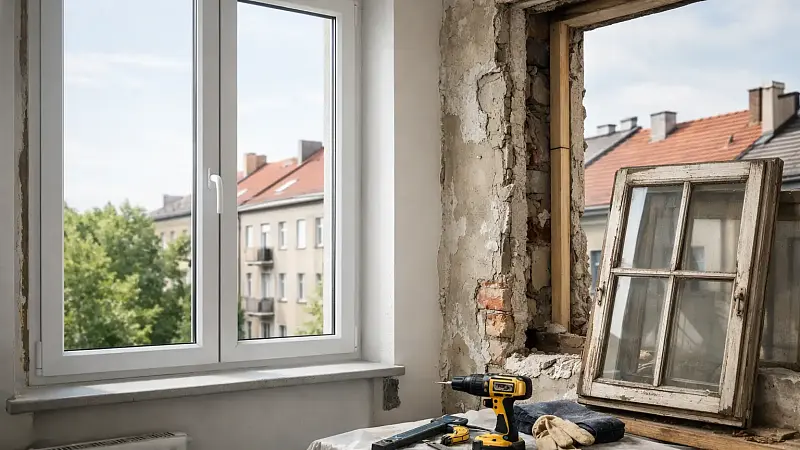
In many cases, the first question is whether to remove the entire existing frame or renovate while retaining part of the old structure. There is no simple answer. Completely replacing the old frame is usually the technically more reliable solution because it allows weaknesses around the installation joints to be identified and corrected directly. However, it involves more work, creates more dust and debris, and may require additional plastering or façade repairs.
Renovating while retaining part of the existing frame may initially appear cheaper and faster. In certain situations, this can be a sensible option if the existing frame is structurally sound and the installation conditions are suitable. However, this approach often reduces the glazed area, and hidden defects may remain unresolved. Anyone considering the long-term value of the renovation should therefore look beyond the initial quotation.
Correct sealing is equally essential. On the inside, the installation joint must be airtight. On the outside, it must provide protection against driving rain while allowing greater vapour diffusion. Between these layers, the joint requires effective thermal insulation. This basic principle sounds simple, but it is frequently applied incorrectly in practice. The result can be draughts, moisture problems or thermal bridges, despite having brand-new windows.
Calculating the Cost of Window Replacement in Older Buildings Realistically
Comparing window prices alone rarely means comparing the actual cost of a project. In older buildings, the total cost consists of several components: the window unit, glazing, additional features, special shapes, removal of existing windows, disposal, installation and any subsequent work on plaster, window reveals or window sills. Only by considering all these factors can a reliable budget be established.
The price of each window depends heavily on the material, profile system, glazing specification and custom dimensions. Standard sizes rarely match the requirements of older buildings. A configurable window system with clearly defined pricing options is therefore often more economical than supposedly fixed-price offers that introduce additional charges later. Requesting a quotation directly from a manufacturer or sales partner based on exact measurements provides greater transparency from the outset.
Installation costs should never be left to guesswork. A low price per square metre means little if removal, disposal, adjustment work or installation joints are not clearly specified. Always ask exactly what services are included, which installation method will be used and whether additional work may be required. This helps prevent unexpected charges and makes quotations genuinely comparable.
Grants and subsidies can improve the financial viability of a renovation, but they should not determine the technical choice. A window that qualifies for financial support is not automatically the right solution for every older building. The sensible approach is to define the appropriate window solution first and then check which funding programmes may apply.
Common Mistakes That Make Renovating Older Buildings Expensive
The most common mistake is taking incorrect or inaccurate measurements. Closely behind it is the assumption that every modern window is automatically better than the existing system. An improvement is only achieved when the window, installation connections and intended use are properly matched.
Another common mistake is focusing exclusively on the U-value. Thermal insulation is certainly important. However, ignoring sound insulation, solar heat gain, ventilation behaviour or security requirements will not produce a well-balanced solution. A bedroom facing a busy road has different priorities from a rarely used utility room.
Appearance should not be overlooked in older buildings either. Frame proportions, sash divisions, glazing bars and colour choices can significantly influence the character of the façade. Focusing exclusively on technical performance risks producing a result that looks new but does not suit the building. Particularly in valuable existing properties, achieving the right visual balance can also influence future market value.
Finally, the ordering process is often underestimated. Windows for older buildings should not be selected casually. A well-structured configuration process with clear options for materials, glazing, hardware, colours and additional products saves time and reduces the risk of making the wrong decisions. This is precisely where digital direct sales offer an advantage: dimensions, features and prices can be compared systematically before placing an order.
How to Approach Window Replacement Cost-Effectively
The most sensible approach is not to sign the first quotation you receive, but to organise the project in a clear sequence. Start by assessing the existing condition, then take accurate measurements, define your requirements and only then compare materials and window systems. This makes it easier to determine whether a competitively priced PVC window system is sufficient or whether a higher-specification solution would be a better investment for the particular property.
Comparability is especially valuable when replacing several windows in an older building. When dimensions, opening types, glazing and additional options are recorded transparently, individual items can be calculated accurately and prioritised according to cost-effectiveness. Not every window in a house needs the same specification. A basement has different requirements from a living area, just as windows on the weather-exposed side of a building have different needs from those facing a sheltered courtyard.
Configuring windows online and requesting a non-binding quotation based on actual measurements often saves not only time but also traditional mark-ups associated with intermediaries. With suppliers such as FENSTERNORM, this direct and structured approach offers a clear advantage: made-to-measure window systems, a choice of technical specifications and transparent pricing without unnecessary complications.
Ultimately, replacing windows in an older building is not about promises made in a brochure, but about choosing windows that genuinely fit the property in terms of construction, technical performance and cost-effectiveness. When these three factors come together, renovation becomes an investment whose benefits can be felt every day: quieter rooms, reduced heat loss and a home that once again feels well insulated, valuable and architecturally harmonious.