A door opening to the terrace is often wider than expected - and this is exactly where it becomes clear whether a room feels spacious or whether the door leaf gets in the way every day. When choosing between a sliding door or balcony door, appearance is therefore not the only consideration. The floor plan, desired opening width, thermal insulation, budget and how the terrace is used determine which solution will provide lasting satisfaction.
A classic balcony door is attractively priced, proven and highly versatile in its configuration. A sliding door creates large glass surfaces, plenty of natural daylight and an almost threshold-free transition to the outdoors. Both systems can be made to measure, energy-efficient and secure. The key is to weigh their advantages according to the specific requirements of the building project.
Sliding door or balcony door: The difference in everyday use
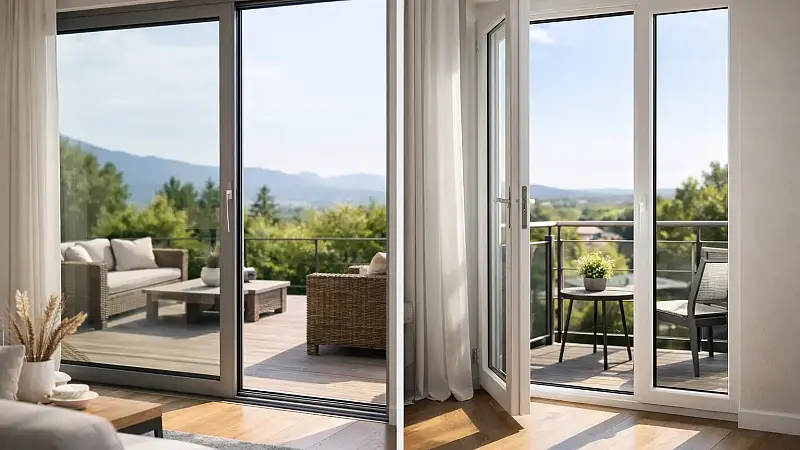
A balcony door is a single- or double-leaf tilt-and-turn door. When opened, the leaf swings into the room or outward. The tilt function allows controlled ventilation without fully opening the door. Especially for small and medium-sized openings, it is an economical and functional solution.
A sliding door, by contrast, moves parallel to the glass surface. Depending on the system, it may be a lift-and-slide door, a parallel sliding tilt door or a sliding element combined with fixed glazing. The moving leaf does not require any swing space. This is a clear advantage in living areas, near dining tables or in rooms where furniture space is limited.
If the access is mainly used for ventilation and occasional use of the balcony, a balcony door is often perfectly adequate. If, however, the terrace is intended to function as a direct extension of the living space, the sliding door reveals its strengths. It visually opens up the façade and creates a wide, comfortable passage.
Assessing space requirements and opening width correctly
With a balcony door, sufficient space is required for the open leaf. In a narrow kitchen, small bedroom or compact apartment, this can restrict furniture placement. An inward-opening leaf should not interfere with radiators, curtains, sofas or dining tables.
A sliding door eliminates the need for this swing space. However, this does not automatically mean that its entire width is available as a passage. With a two-part element, one section generally remains fixed while the other slides in front of or behind it. For particularly large openings, multi-part lift-and-slide doors with several movable leaves are suitable.
For normal balcony access, a single-leaf balcony door is often sufficient. For a wide terrace, garden area or transition between the kitchen and outdoor space, a sliding door with a large clear opening can significantly improve living comfort. Do not measure only the existing wall opening; also consider walking routes, furniture positions and the desired clear passage width when the door is open.
Large glass surfaces: More light, but also more planning
Sliding doors bring more glass into the façade. This creates bright interiors, unobstructed views outside and a high-quality architectural appearance. This effect is particularly desirable in new-build homes with open-plan living and dining areas.
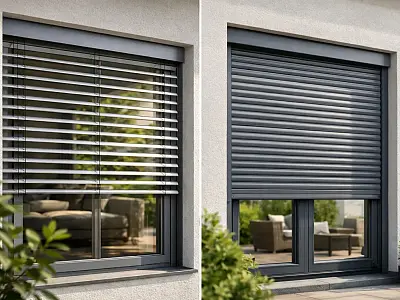
Large areas of glazing, however, require careful planning. The orientation of the building, protection against summer heat and suitable sun protection become increasingly important. A south- or west-facing glass façade without shading can heat up considerably in summer. Roller shutters, raffstores, screens or other external shading solutions should therefore be considered at an early stage of the planning process.
A balcony door with a sidelight or transom can be an interesting intermediate solution. It provides more daylight than a door alone while often remaining more affordable than a large-format sliding door system.
Thermal insulation and airtightness
Both modern balcony doors and high-quality sliding doors can achieve excellent thermal insulation values. The decisive factors are the profile system, the glazing, the number and quality of the seals, and the professional connection to the building envelope. PVC, aluminium and timber-aluminium systems each offer different advantages in terms of price, design and maintenance requirements.
A classic tilt-and-turn balcony door is pressed firmly against the frame around its entire perimeter when closed. Due to its construction, this provides highly reliable airtightness. In sliding doors, specially developed sealing and hardware systems perform this function. High-quality lift-and-slide doors also close tightly and securely by lowering the sash into position.
When carrying out an energy-efficient renovation, the Uw value of the complete element should not be the only consideration. The glazing, warm-edge spacers, the connection to the wall and professional installation are equally important. Even the best door loses its advantages if the connection joints and thresholds are installed incorrectly.
Ease of operation, threshold and accessibility
A balcony door is intuitive to operate: turn the handle, open or tilt. This is practical for daily intensive ventilation. With a larger double-leaf door, the inactive leaf is usually opened only when required, for example when garden furniture or larger objects need to be moved outside.
With a lift-and-slide door, the handle is operated to raise the sash slightly before it is moved sideways. Modern hardware makes even large elements comfortable to operate. Nevertheless, their weight and dimensions are considerably greater than those of a standard balcony door. High-quality rollers, handles and hardware pay off over many years of use.
A key advantage of many sliding door systems is the low threshold. It reduces the risk of tripping and makes access easier for children, older people, walking aids or terrace trolleys. For projects designed with reduced barriers, this is often a decisive advantage. Low thresholds are also possible with balcony doors, but the specific design must be compatible with the waterproofing concept and installation conditions.
Security: Look beyond the lockable handle
Terrace and balcony doors are among the areas that deserve particular attention when planning building security. A lockable handle can be useful, but it is only one component. Resistant hardware, mushroom-head locking points, security glazing and secure anchoring to the building structure all work together.
On a balcony door, additional locking points increase resistance to forced entry by levering. For large sliding doors, a stable frame, secure locking mechanism and appropriate glazing are particularly important. For ground-floor installations, easily accessible terraces or properties with increased security requirements, the security features should be included in the configuration from the very beginning.
Insect protection also deserves consideration. Hinged or swing insect screen doors are commonly used with balcony doors. Sliding doors can be combined with suitable sliding insect screens. The solution should be determined at an early stage so that operation, guide rails and shading systems work together effectively.
Costs: Weighing the purchase price against long-term benefits
For comparable dimensions, a balcony door is usually the more affordable choice. It requires less complex hardware and is ideally suited to standard openings. With high-quality glazing, security hardware and an individual colour, it can become a premium-quality element without placing unnecessary strain on the budget.
Sliding doors generally cost more due to their larger glass surfaces, reinforced profiles, specialised hardware and higher requirements for transport and installation. In return, they offer greater living comfort, more daylight and convenient access to the terrace. Especially in a new build or comprehensive renovation, this investment can pay off in the long term.
Always compare quotations on the same basis: overall dimensions, material, glazing, colour, security class, threshold, shading and installation must be defined identically. A seemingly low starting price means little if important features are missing. Made-to-measure production directly from the manufacturer provides greater transparency because dimensions and options can be configured clearly and comprehensibly.
Which solution is right for your project?
A balcony door is particularly suitable when the opening is relatively compact, the tilt function is important and budget is a priority. It is an excellent choice for bedrooms, home offices, upper floors and traditional balconies. With a sidelight, transom or double-leaf configuration, it can also be expanded in terms of design.
A sliding door is the right solution when the living space and terrace should be visually connected. It is particularly worthwhile for wide façade openings, modern living concepts, limited space in front of the door and when a low threshold is desired. For large, heavy and frequently used elements, a high-quality lift-and-slide door is often the most convincing solution.
Before configuring your door, define three key factors: the required passage width, the furniture arrangement inside the room and the desired level of thermal insulation. With this information, the right system, material and features can be selected with much greater confidence - turning a simple door opening into an access point that creates a lasting connection between your home and terrace.